
If you’ve ever caught your toddler staring longingly at the pickle on your sandwich, you’re not alone.
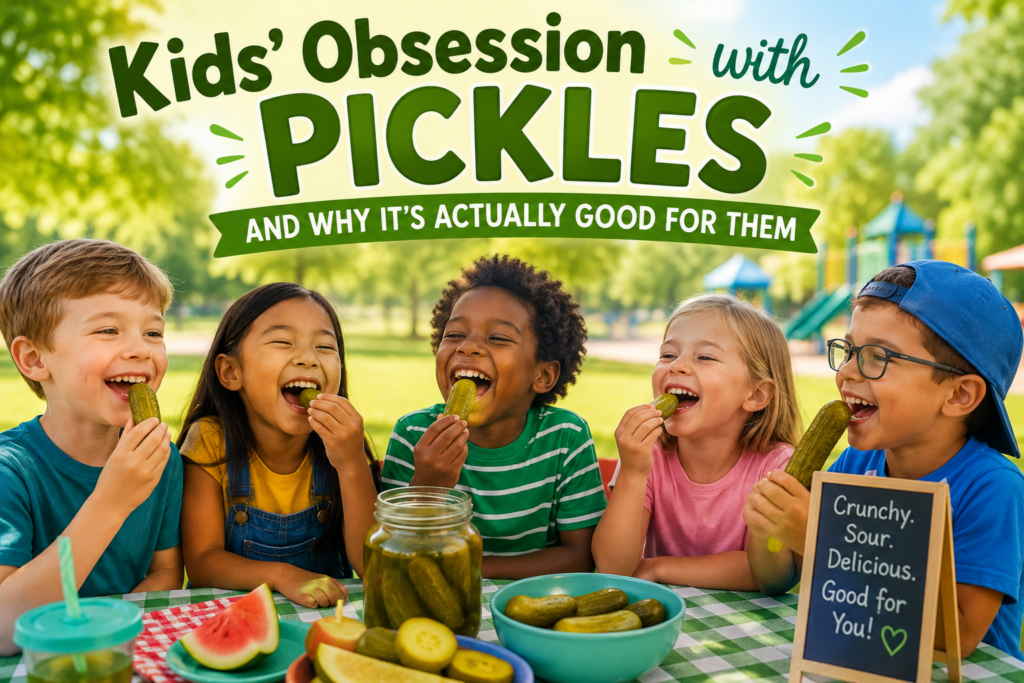
Parents are often surprised by how fascinated children become with pickles. The crunch. The sour flavor. The funny faces they make after the first bite. Somehow, pickles become one of those unexpected childhood obsessions.
But that raises an important question:
When is it actually safe to introduce pickles into a child’s diet?
The good news? For most children, pickles can become part of a healthy diet once they’re comfortably eating solid foods. Like many foods, timing, preparation, and moderation matter more than the pickle itself.
The Short Answer
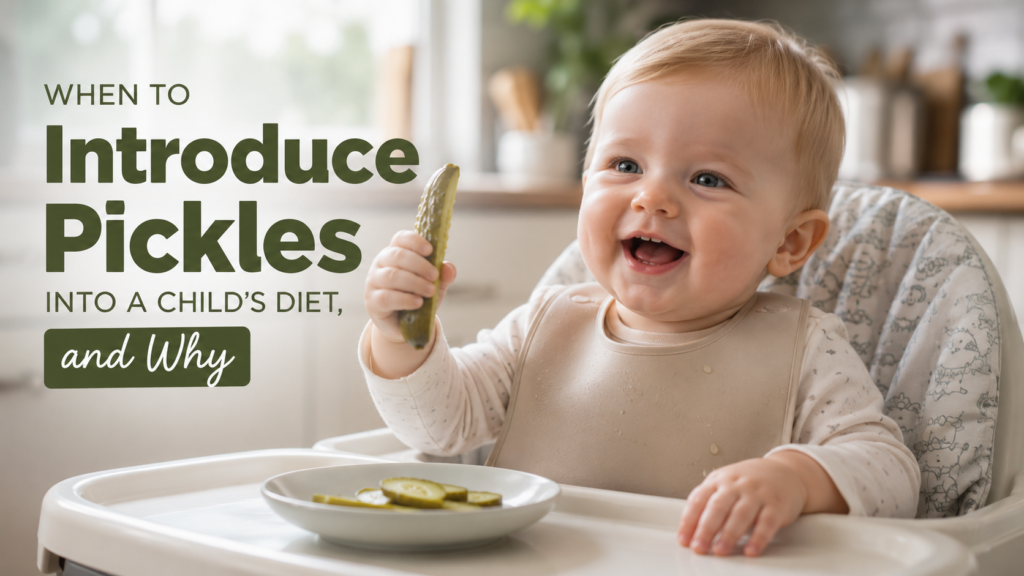
Most pediatricians recommend waiting until babies are confidently eating a variety of solid foods before introducing pickles.
For many children, that’s somewhere around 9 to 12 months, provided the pickle is:
- cut into small, age-appropriate pieces
- soft enough to chew safely
- served under supervision
- offered only occasionally because of its sodium content
Whole pickle spears should wait until your child is older and able to chew confidently.
Why Do Kids Love Pickles So Much?
Parents often assume children only enjoy sweet foods.
In reality, many kids are naturally drawn toward bold flavors.
Pickles offer an experience unlike almost any other food:
- a satisfying crunch
- a burst of sourness
- a little saltiness
- a cool, juicy texture
For children exploring new tastes, that’s exciting.
Some pediatric feeding specialists even encourage exposing children to a wide range of flavors early in life to help reduce picky eating later.
Can Pickles Actually Be Good for Kids?
In moderation, yes.
While they aren’t a nutritional powerhouse, pickles do offer several surprising benefits.
They Encourage Adventurous Eating
Children who regularly experience different flavors often become more willing to try unfamiliar foods later.
That confidence can carry into vegetables, fruits, and family meals.
They’re Low in Sugar
Unlike many packaged children’s snacks, pickles contain very little sugar.
Choosing whole foods over heavily processed snacks is almost always a win.
Some Pickles Contain Probiotics
Naturally fermented pickles (not every pickle on grocery shelves) may contain beneficial bacteria that support gut health.
Look for refrigerated varieties labeled:
- Naturally Fermented
- Live Cultures
- Probiotic
What Should Parents Watch Out For?
The biggest concern isn’t vinegar.
It’s sodium.
Many commercially prepared pickles contain a significant amount of salt.
That doesn’t mean children should never eat them.
It simply means pickles should be treated like an occasional snack rather than an everyday food.
A few slices alongside lunch are very different from polishing off an entire jar.
Tips for Introducing Pickles Safely
If you’d like your child to give pickles a try, these simple guidelines can help.
Start Small
Offer thin slices instead of whole spears.
Watch the Texture
Avoid overly crunchy or oversized pieces for younger toddlers.
Pair Them With Other Foods
Try serving pickles alongside:
- turkey
- cheese
- cucumbers
- crackers
- hummus
This creates a balanced snack instead of relying on pickles alone.
Let Kids Explore
Don’t pressure children to like them.
Half the fun is watching their hilarious reaction to the first sour bite.
Why New Foods Matter
Introducing different textures and flavors during childhood isn’t just about nutrition.
It’s about curiosity.
Trying something new teaches children that unfamiliar doesn’t have to mean scary.
Whether it’s broccoli, blueberries, or yes… pickles… each new food helps build confidence.
Those little moments of discovery often become some of childhood’s funniest memories.
Frequently Asked Questions
Can babies eat pickles?
Once babies are comfortably eating solid foods and can chew safely, small pieces of pickle can usually be introduced in moderation. Always consult your pediatrician if you have concerns specific to your child.
Are pickles healthy for toddlers?
They can be. Pickles are low in sugar and some fermented varieties contain beneficial probiotics, but they’re also high in sodium, making moderation important.
Why do toddlers like sour foods?
Children are naturally curious about bold tastes and textures. Sour foods provide a unique sensory experience that many kids find exciting.
Are fermented pickles better?
Naturally fermented pickles may provide probiotic benefits that vinegar-based shelf-stable pickles typically do not.
Should children drink pickle juice?
Generally, water and milk remain the best choices. Because pickle juice contains high levels of sodium, it should only be offered sparingly, if at all.
Parent Pro Tips
✔ Introduce new foods one at a time.
✔ Make tasting new foods feel like an adventure, not a test.
✔ Celebrate curiosity—even if your child spits the pickle back out.
✔ Don’t worry if they make a funny face. That’s part of the experience.
✔ Keep introducing a variety of flavors throughout childhood.
A Funny Fact
Did you know some grocery stores sell individual snack pickles because they’ve become so popular with kids and adults alike?
Who knew one humble cucumber could become lunchbox royalty?
Looking for a Silly Book Your Child Will Love?
If your family has discovered an unexpected love for pickles, you’re in good company.
Peter & Pauline celebrates exactly the kind of goofy curiosity kids are famous for—with playful language, laugh-out-loud moments, memorable alliteration, and a pickle-filled adventure that’s just as much fun for parents to read aloud as it is for children to hear.
Whether you’re building a bedtime library, searching for a unique gift, or looking for a story that sparks giggles and conversation, Peter & Pauline was created for families who believe reading should be joyful.
🥒 Discover the adventure at https://www.peterandpauline.com/ and see why so many young readers fall in love with a wonderfully weird pickle story.